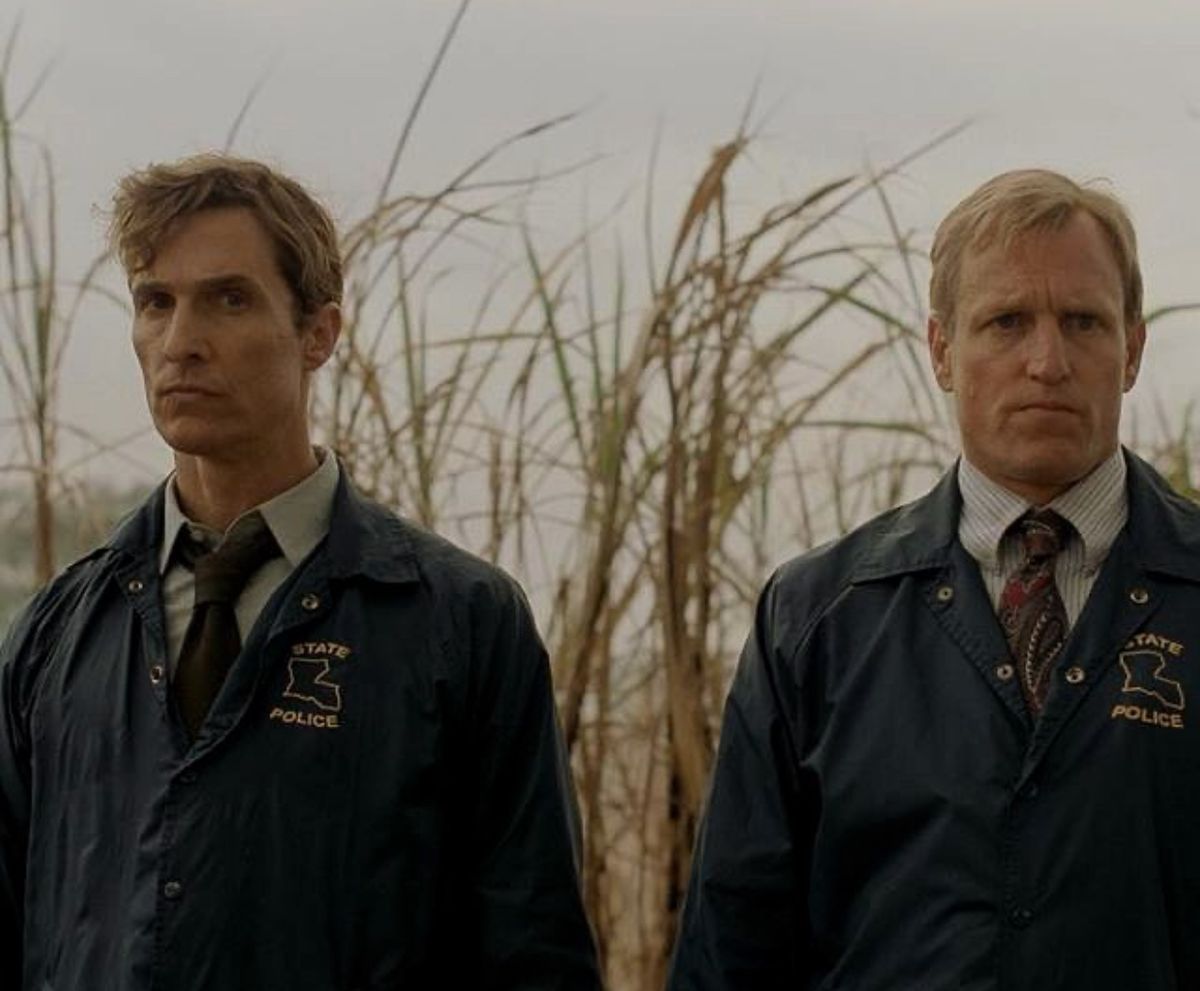
My dad made me red beans and rice during covid. I had never had it before then, but I knew it was a meal people ate. Then, in graduate school, I read an article/story about a man who invites 10 (a good group, I can’t remember exactly how many) people, usually friends but often also acquaintances or random people, for dinner once a week, always for red beans and rice. This article really stuck with me. I have never been to Louisiana or New Orleans (I think that is where the dish comes from? At least this person lived there). I had a boss, who I loved dearly and enjoyed working for, who lived in New Orleans for a while and met his wife there. I have heard stories from him about the place, I have read about it, and two of my favorite pieces of media are set there; the movie Down By Law by Jim Jarmusch and the first season of the tv show True Detective.
Planning school teaches you a lot of bad things about Louisiana and New Orleans; public planning debacles and money laundering, the horrors of Katrina, poverty, racist highways, etc., and with all of these things also come examples of people finding/protecting community as best they can, even if they have to pick up and move. From these things, I have some sense of Louisiana and New Orleans. I imagine that parts of it smell like wet cigarettes, and parts of it smell like muddy swamp grass. My boss has told me stories about biking over bridges, and I imagine it as having many bridges and lots of potholes. In my New Orleans, the potholes are enormous, big enough to swallow up cars. The real New Orleans is sinking. Once it sinks too far, it will be fully flooded like towns cleared for reservoirs. My planning school was in Amherst, MA. A few towns are drowned at the bottom of the Quabbin reservoir, which you pass if you are driving to or from Amherst from Boston. Nobody cares about them, at least not anymore. People do care about New Orleans, and we haven’t seen a city like that sink yet. Alligators will live in shotgun houses, and New Orleans will become a mythical place in common memory. I am a little scared to go to Louisiana, so I am not sure that I will ever have a better informed view of the place.
Every time I make red beans and rice I think about that article and I think about my dad, whose version was the first red beans and rice I ever had, and who does not love cooking for others. Cooking is not how he demonstrates or shares love. He does enjoy hosting, and dotes on guests (mostly by asking if people need more food or drinks, especially the drinks), but this is a somewhat rare thing compared to cooking. We cook and eat every day but we don’t host parties every day. Usually it was my mom who would cook. Many foods remind me of her, and the act of cooking itself makes me feel close to her. Red beans and rice is special to me because it is one of the few dishes I associate only with my dad. My dad wanted to share this dish with me. I don’t know what significance it has to him, or if he even remembers making it for me. My dad shared two other significant dishes with me; ful-medames, which is shared between the two of us, and tomatoes on bread, which was shared from his father to him and from the two of them to me. I remember eating tomatoes cut into big slices, salted, and placed on toast slathered with mayo with my grandfather in his garage on a summer day. I know I ate tomatoes on toast with both him and my dad. Every summer, when the first tomatoes reach the farmer’s market, I buy a loaf of bread and some tomatoes to make this dish. My grandfather passed years ago, he is still very important to me. I do the tomato on toast ritual pretty often to think about him and my dad. Tomatoes on toast is important to us because my grandfather’s family grew famous tomatoes, and ate them in this manner. I have no idea where red beans and rice came from. I don’t think it’s important in any historical or emotional way to my family or my dad. But, it’s important to me.
I knew my mom loved me for many reasons, one being that she cooked for me and she cared enough to share her love of cooking with me. I am sure that red beans and rice has something to do with people carrying their homes with them in memories kept alive by cooking. I moved away from home to go to college a few years ago, and have since moved again to Brooklyn. Red beans and rice was the first meal I made for myself and my dear roommates once national grid came to turn our gas on. I’m kind of broke now, so I’ve invested in dry beans. Before moving away, my coworker Louis, who knows a great deal about growing, drying, and cooking beans, how he deals with his dry beans. I soaked the red beans for more than a day in a big bowl with 2 inches of water above the beans and a little bit of salt. Louis’s method worked great. I had never soaked a bean before, I had always used canned beans.
I don’t actually know how red beans and rice are made traditionally. That wasn’t part of the research article, and I have never had an authentic version, which I don’t think would make me emotional anyways. My dad has never spent time in Louisiana (as far as I know). There are no red beans and rice recipes in True Detective or Down by Law. I know that the beans must be red, kidney beans presumably, that they are usually cooked with celery and some sort of smoked meat, and that they are to be served with some kind of rice. My recipe for red beans and rice is below. It’s no longer exactly how my dad made it, but it’s delicious!
Recipe
This recipe serves four-ish people with leftovers. I have never made it for more than four people, but when I did, it was enough!
- Red beans: 2 cups red beans soaked overnight in a bowl in the fridge with 1 tspn sea salt. Cover the beans with enough water to have 2 inches of bean-free water above the last bean.
- Smoked meat: I have used a bunch of different meats before. I think smoked ham/pork meat with the bone is the best, but I have also used smoked sasuages. Use two of either (2 slabs of pork or 2 sasuages of good size)
- 4 stalks of celery
- 1 large onion
- 1 shallot
- 3 cloves of garlic
- two bay leaves
- olive oil
- salt
- tomato paste
- cumin
- paprika
- water and chicken stock or stock cube
Cut your meat into cube-ish pieces, 1-2cm wide. Dice your onion and shallot, cut your celery lengthwise and then into thin pieces, and mince your garlic. Put some oil in your pot on medium-low heat, and put in the veggies. Salt and add your bay leaves in. Let it cook for a minute until aromatic. Then, add your meat and cook for a few minutes. Don’t let the onion or garlic burn!
Here, make your rice. I use a rice cooker. Wash the rice until the water runs clear-ish. Peel and grate most of one carrot into it. You don’t have to do this part if you don’t want to but it’s fun and gives the rice a little sweetness. Plus, you eat an extra vegetable this way and your rice has a fun color. I grate the carrot using a cheese grater. I use a good sized carrot, the length and width of one in a cartoon or in your mind when you picture a carrot, and I grate it starting with the fatter end until it gets close to my fingers, and then I eat the rest. Put your normal amount of water in the rice and cook as normal. I use 1:1 by volume water:rice ratio.
Make your rice fast-ish, because you need to get back to your beans! Add the tomato paste (a tablespoon-ish), cumin (maybe a teaspoon, probably more), and paprika (also teaspoon-ish) into the veggies. Stir and cook until the celery is tender. Pour in your beans! Add chicken stock or water with a stock cube in it to cover, and then let it cook until the beans are tender.
On occasion I have added a little dark kale (the kind people call tuscan, which looks kind of scaley, not curly) into the pot, torn into small pieces, to use it up. This was a good addition. Stir and let it simmer half covered until your rice is ready. Put some rice in a bowl and scoop some red beans over it. I like to eat it with collard greens (recipe coming soon?) and cholula hot sauce.
Leave a Reply